Research
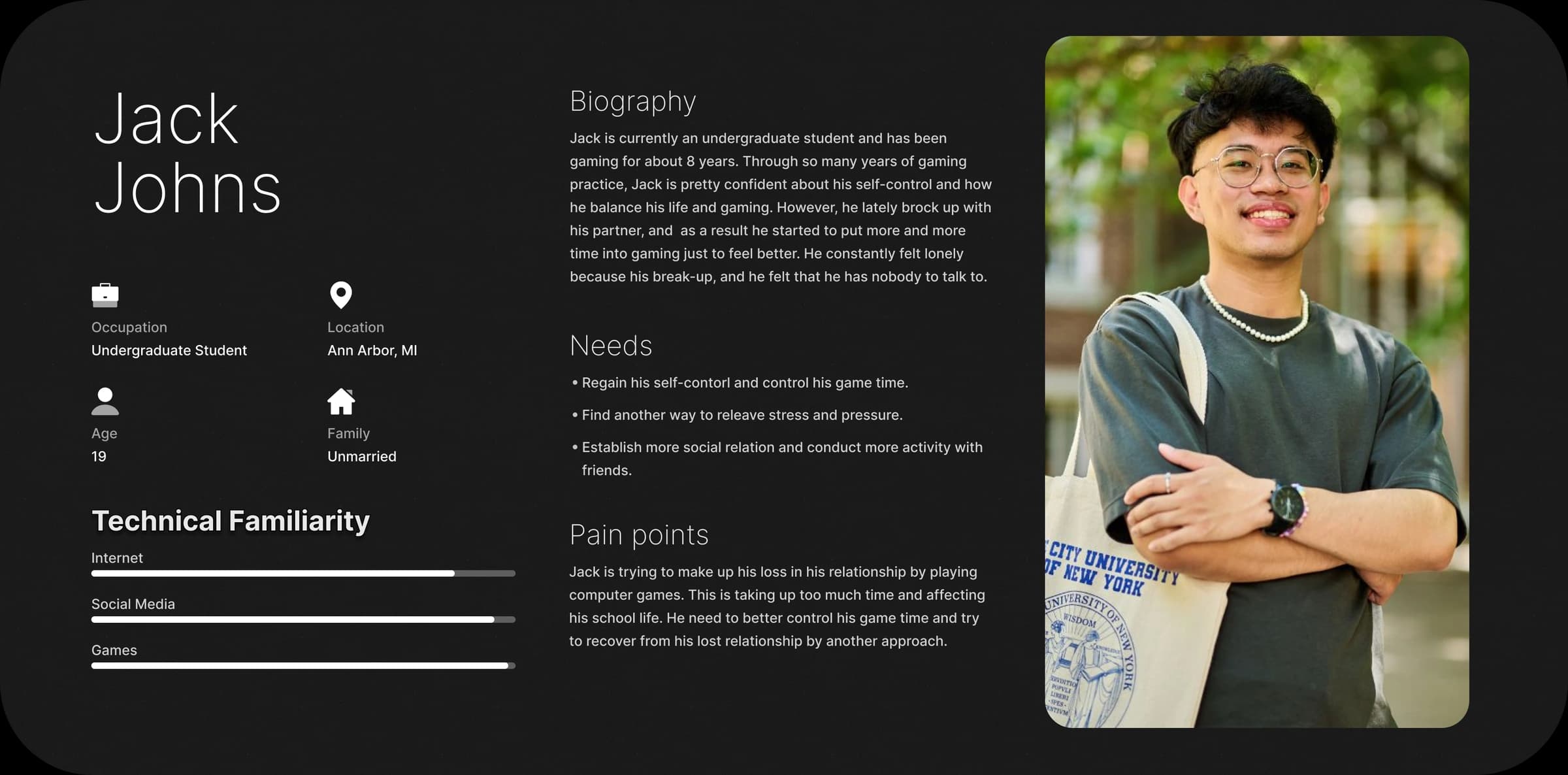
User pain point · Competitive analysis · Persona · Possible solutions

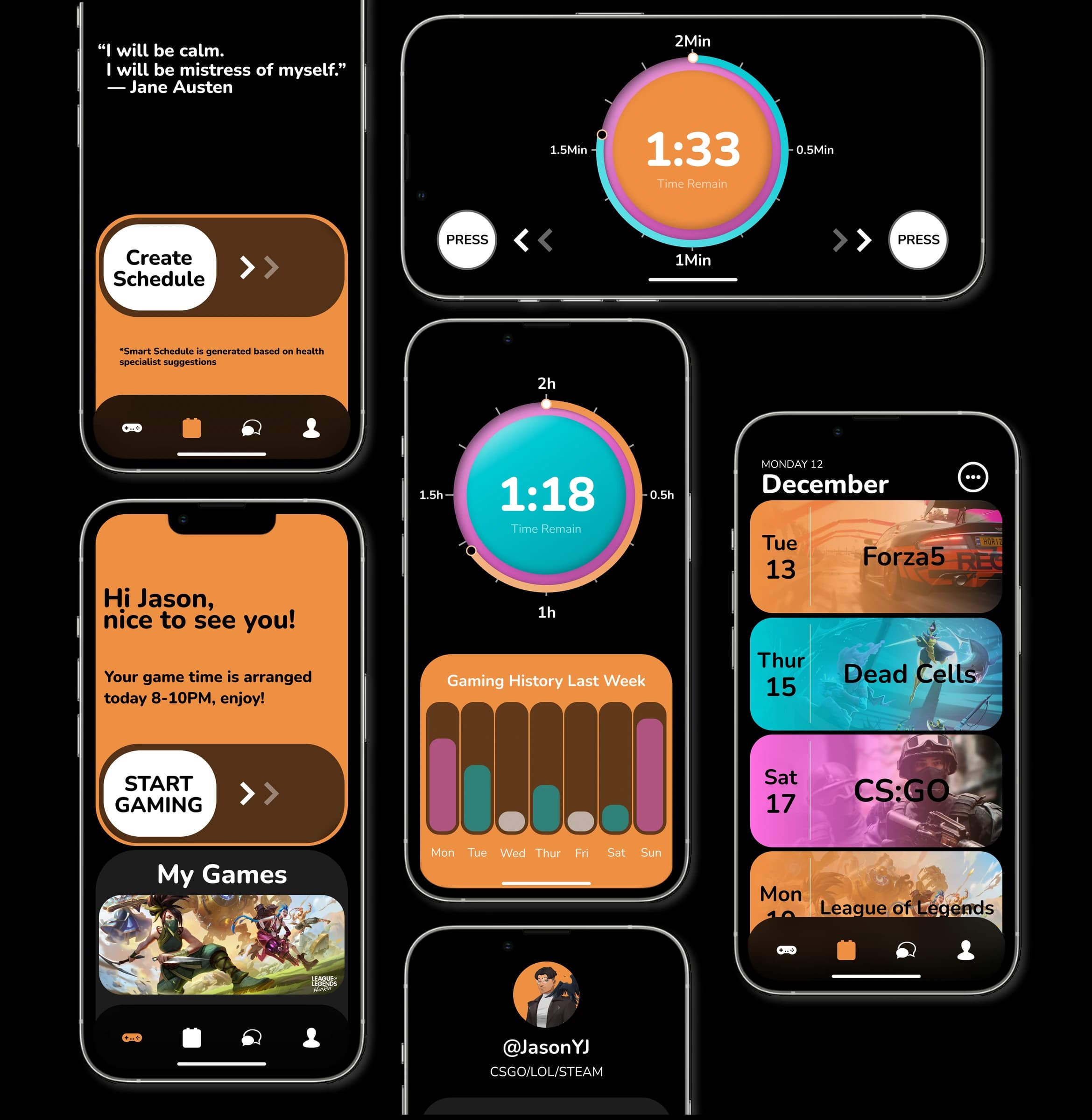
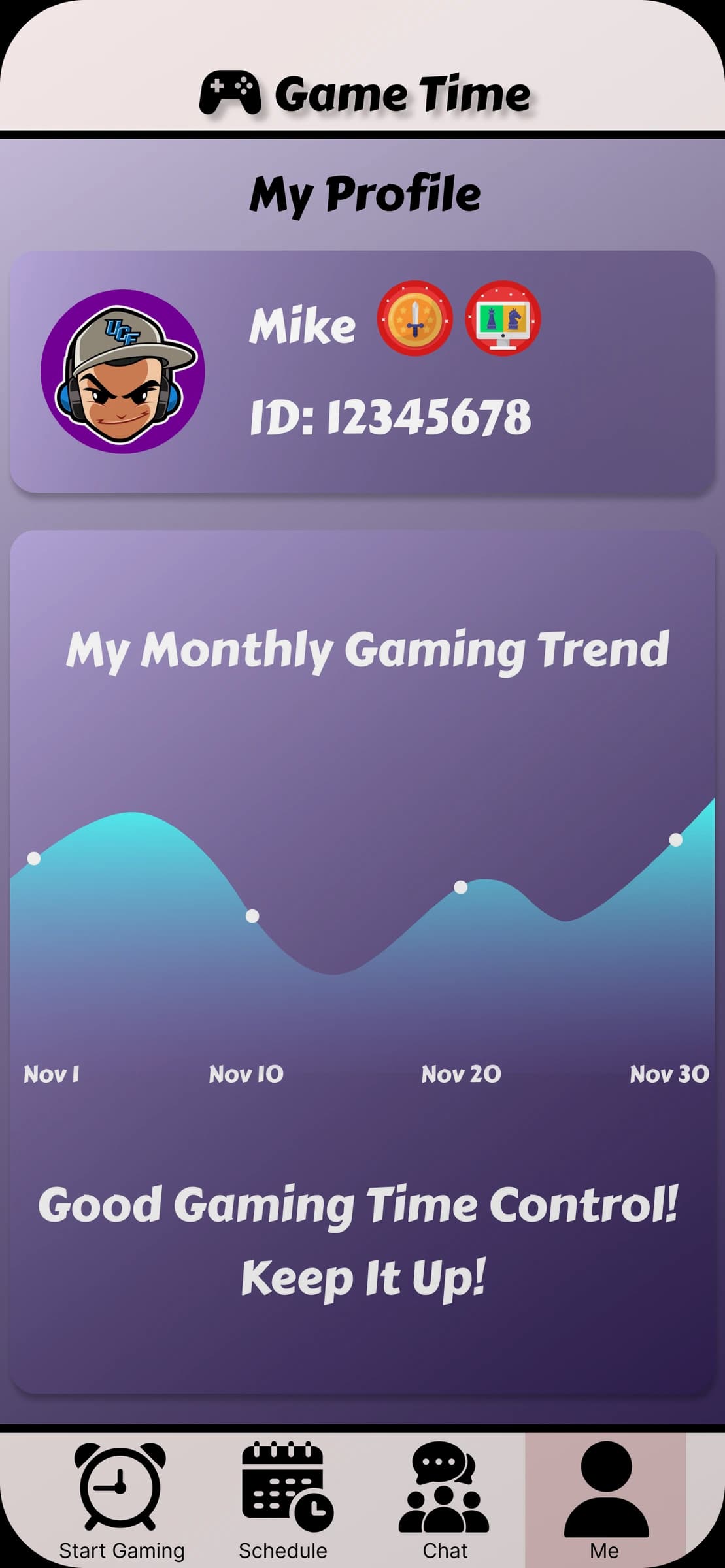
GameTime is an app designed to aid gamers with game time management and prevent addiction. The “timer” stops the user from over-gaming and the “game scheduler” maintains a record of the user's gaming time, keeping it in a healthy interval. The “user profile” page is mainly a show window for users to display their gaming history and badges received from gaming healthily in a consistent manner.
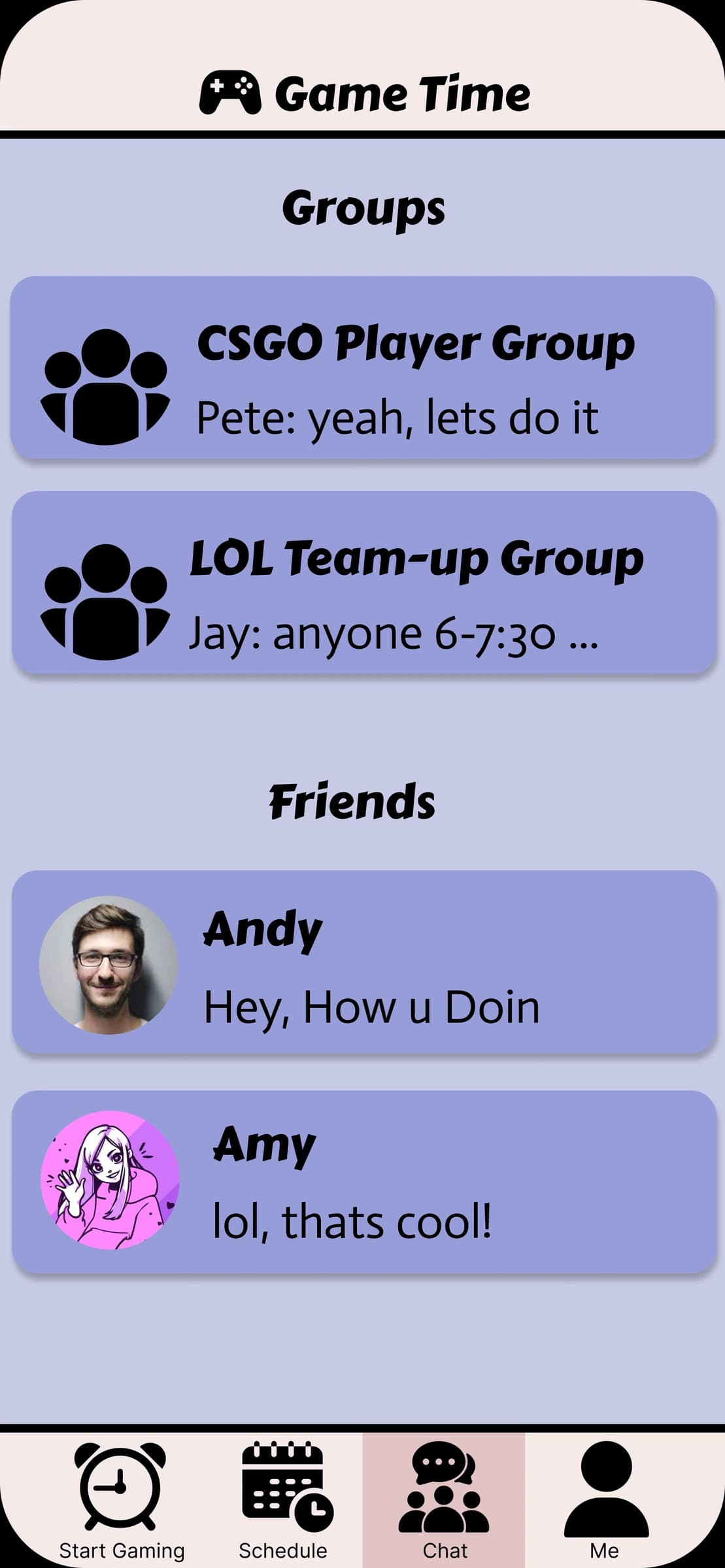
Also included is a “chat hub” where gamers can chat with friends and groups or view other players’ gaming profiles.
User pain point · Competitive analysis · Persona · Possible solutions
Key features · Wireframe
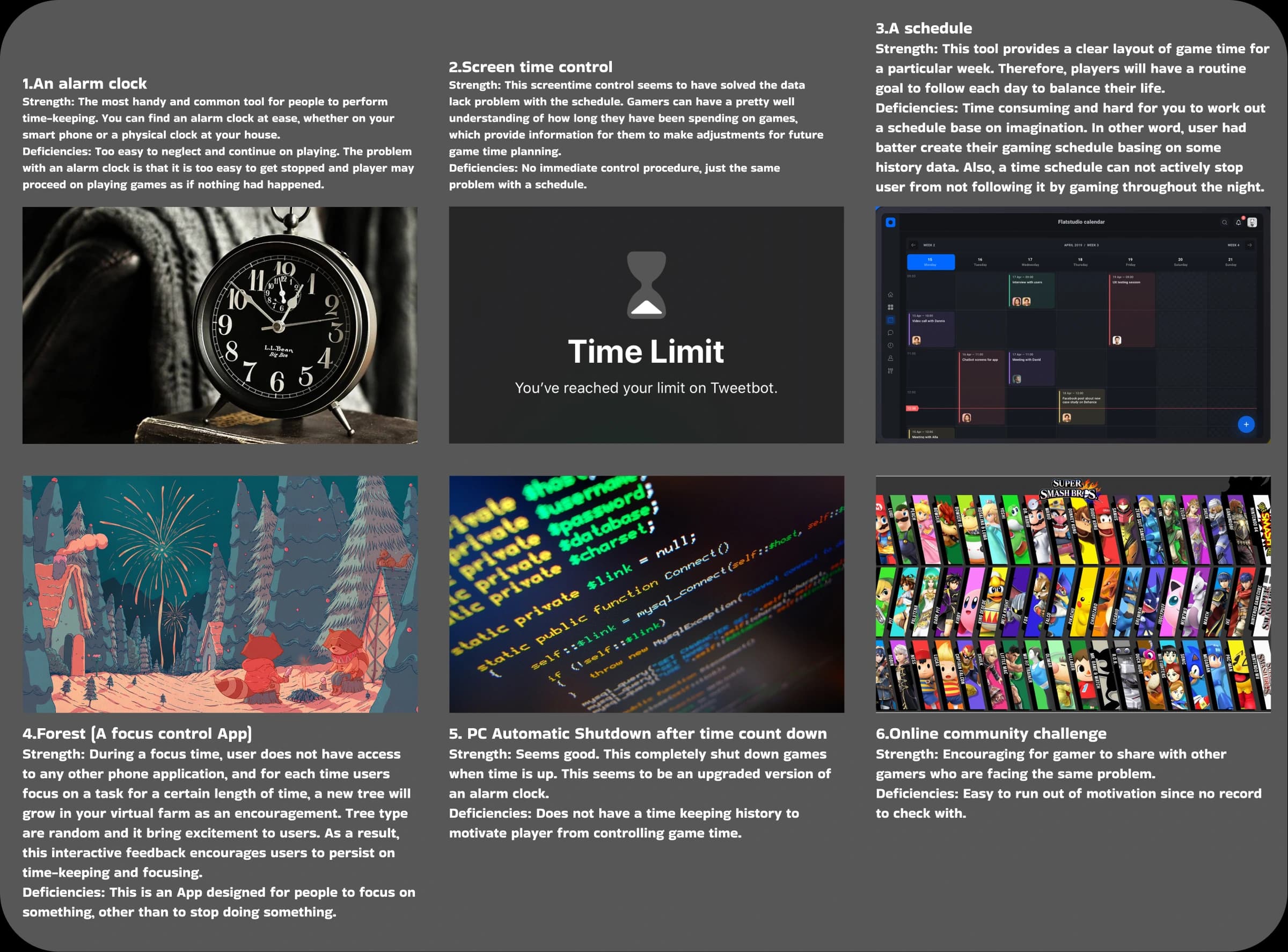
User task flow · Paper prototyping
Usability testing · High-fi prototype
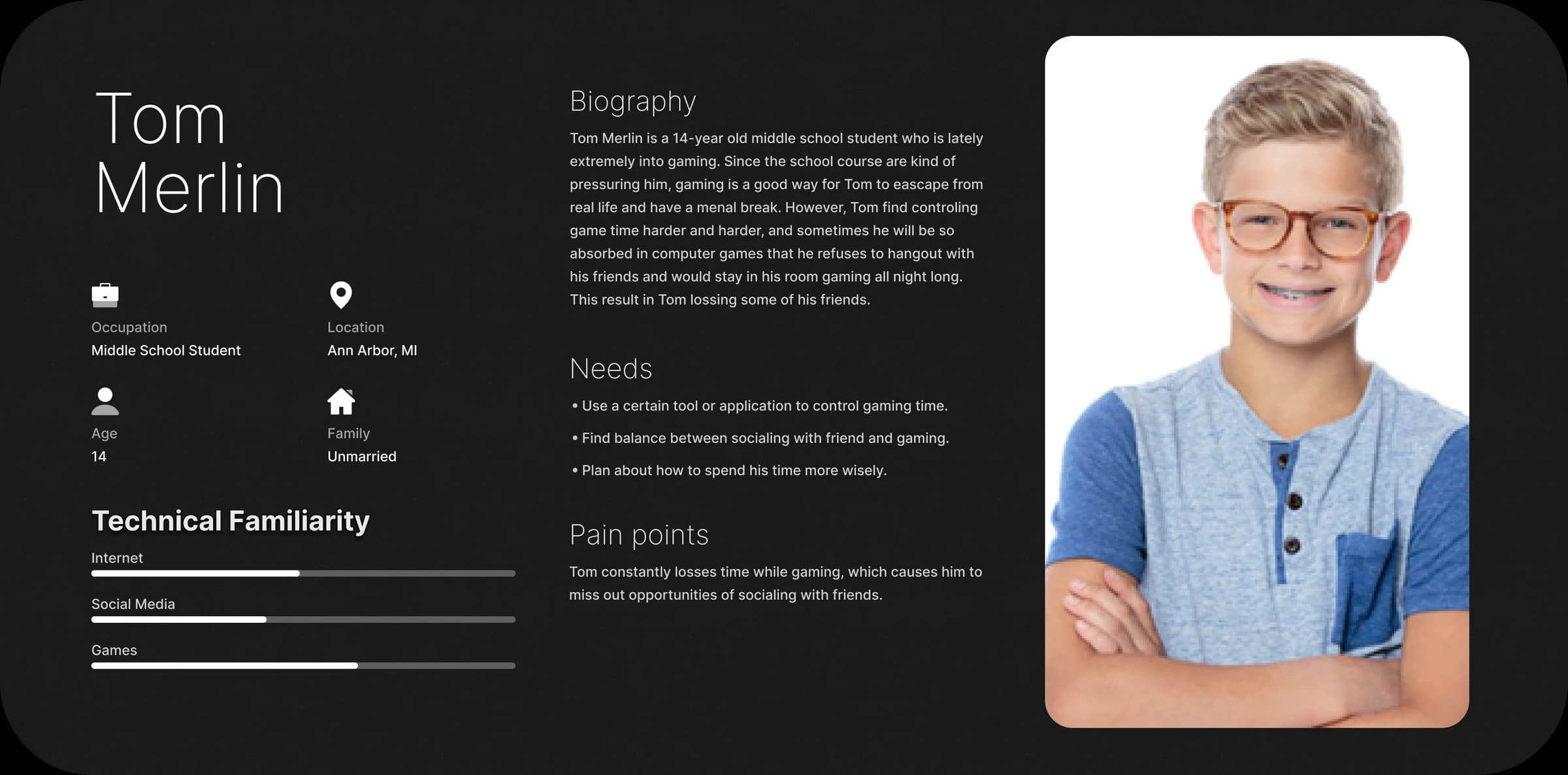
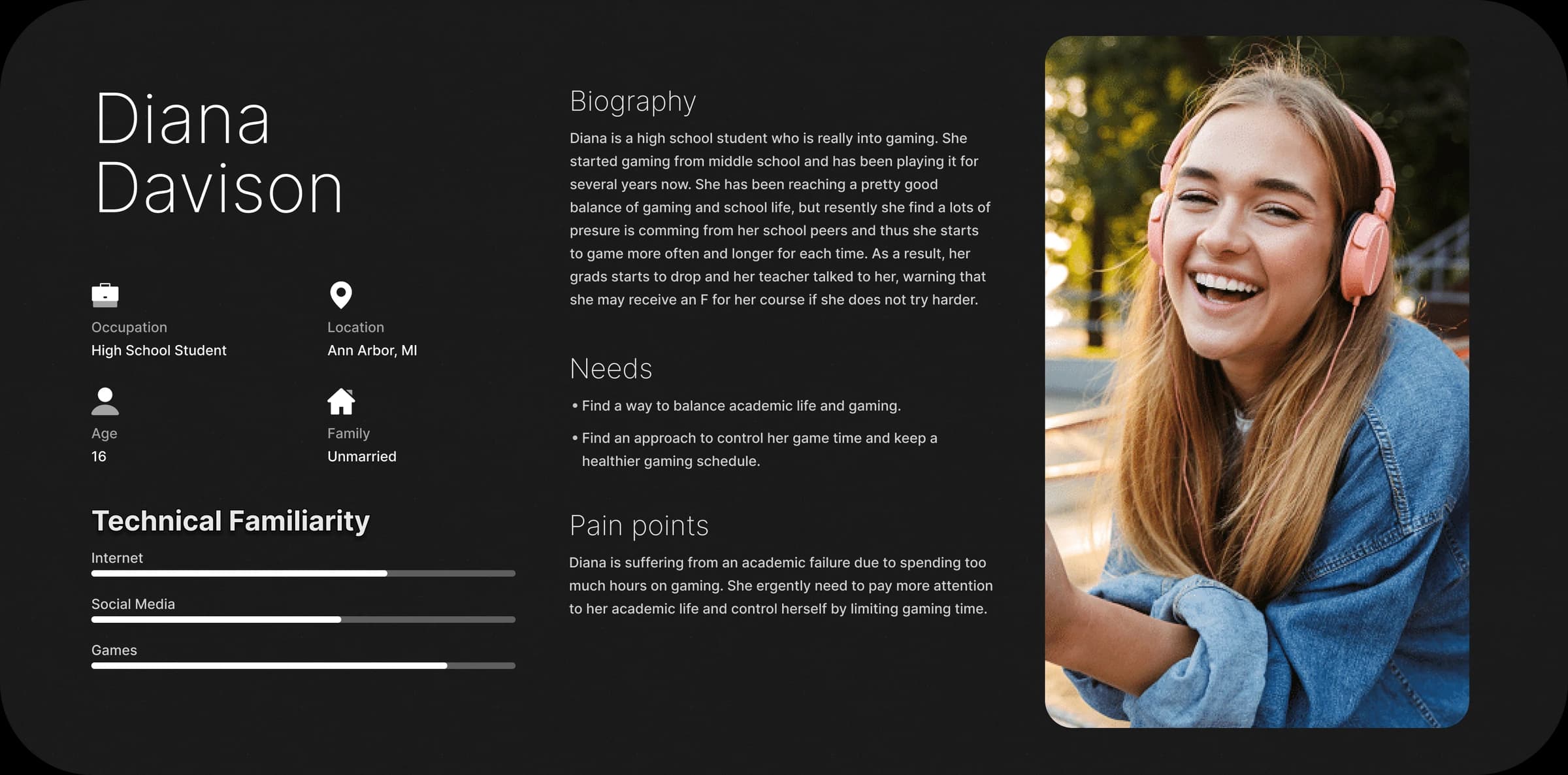
Video gaming addiction is becoming a serious problem among children, teenagers, and young adults, but the remedy to this problem remains scarce and immature. It is extremely hard for gamers to find a helpful assisting app to make the self-control process easier and more efficient.
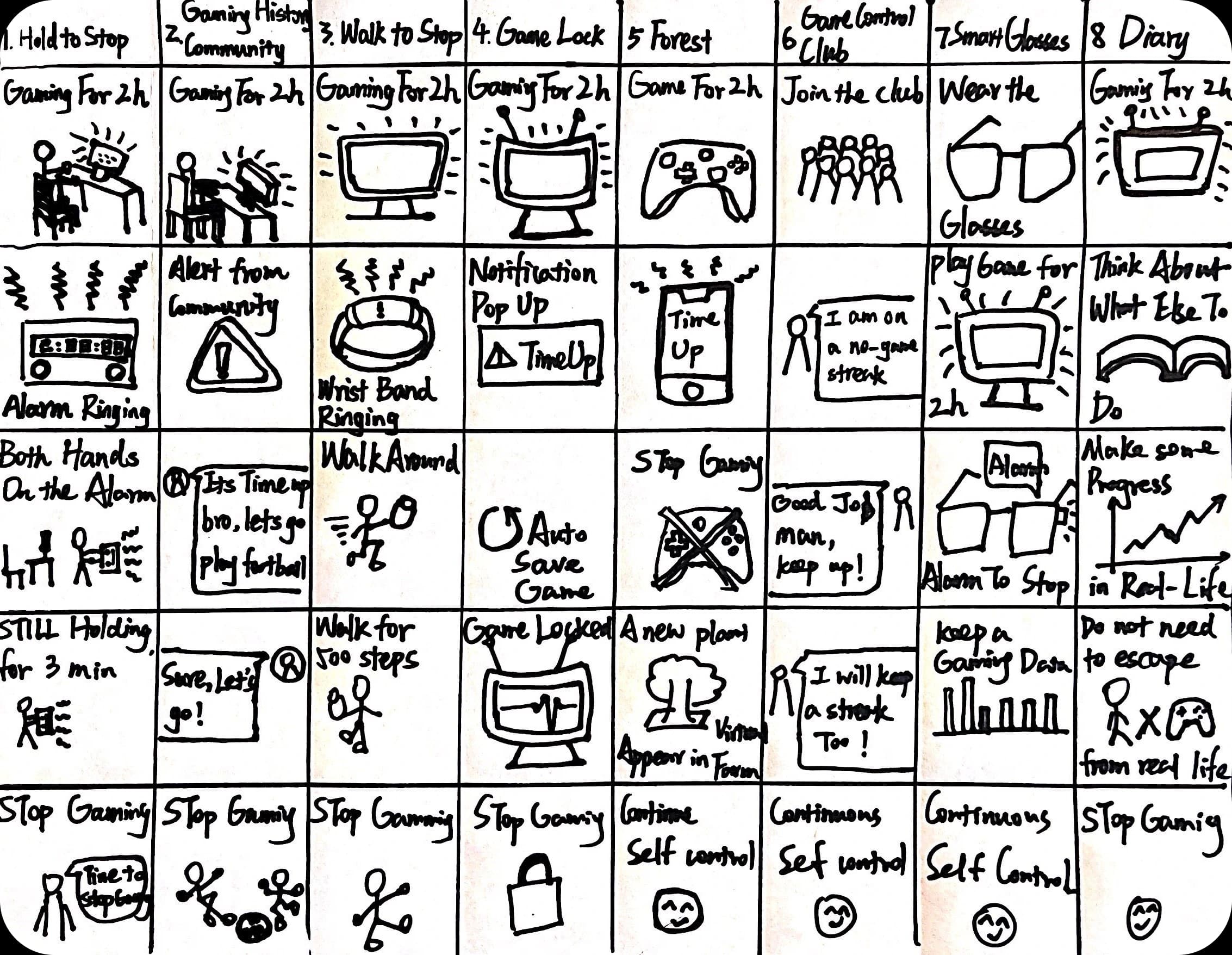
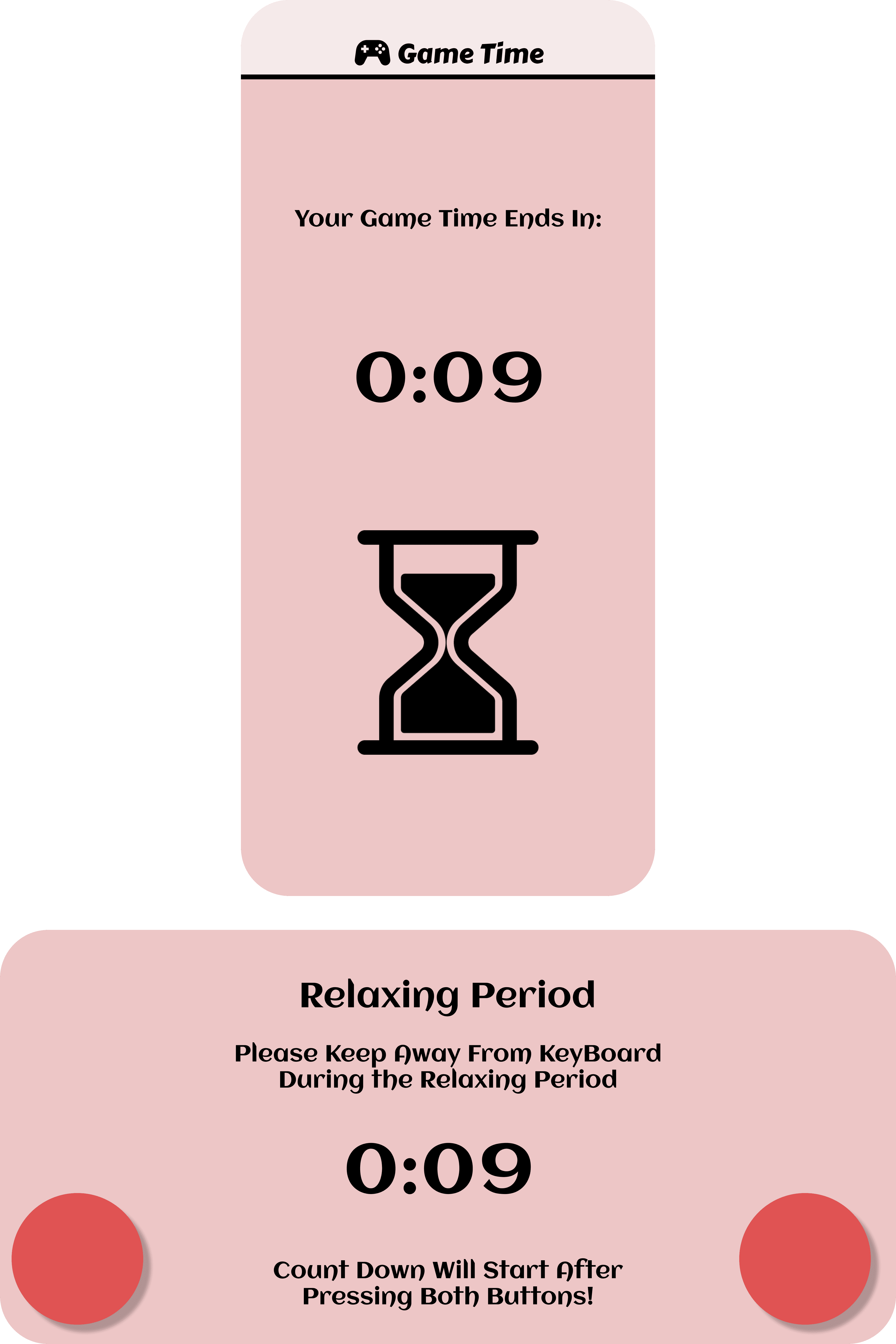
The most critical component of the design solution is a game control feature aimed at keeping users away from the keyboard when a certain amount of game time is over. It functions by requiring the user to put both hands on the device in order to stop a three-minute-long buzzing alarm. If the user does not hold a button, or only holds one button, the countdown of the buzzing alarm will not start or continue.
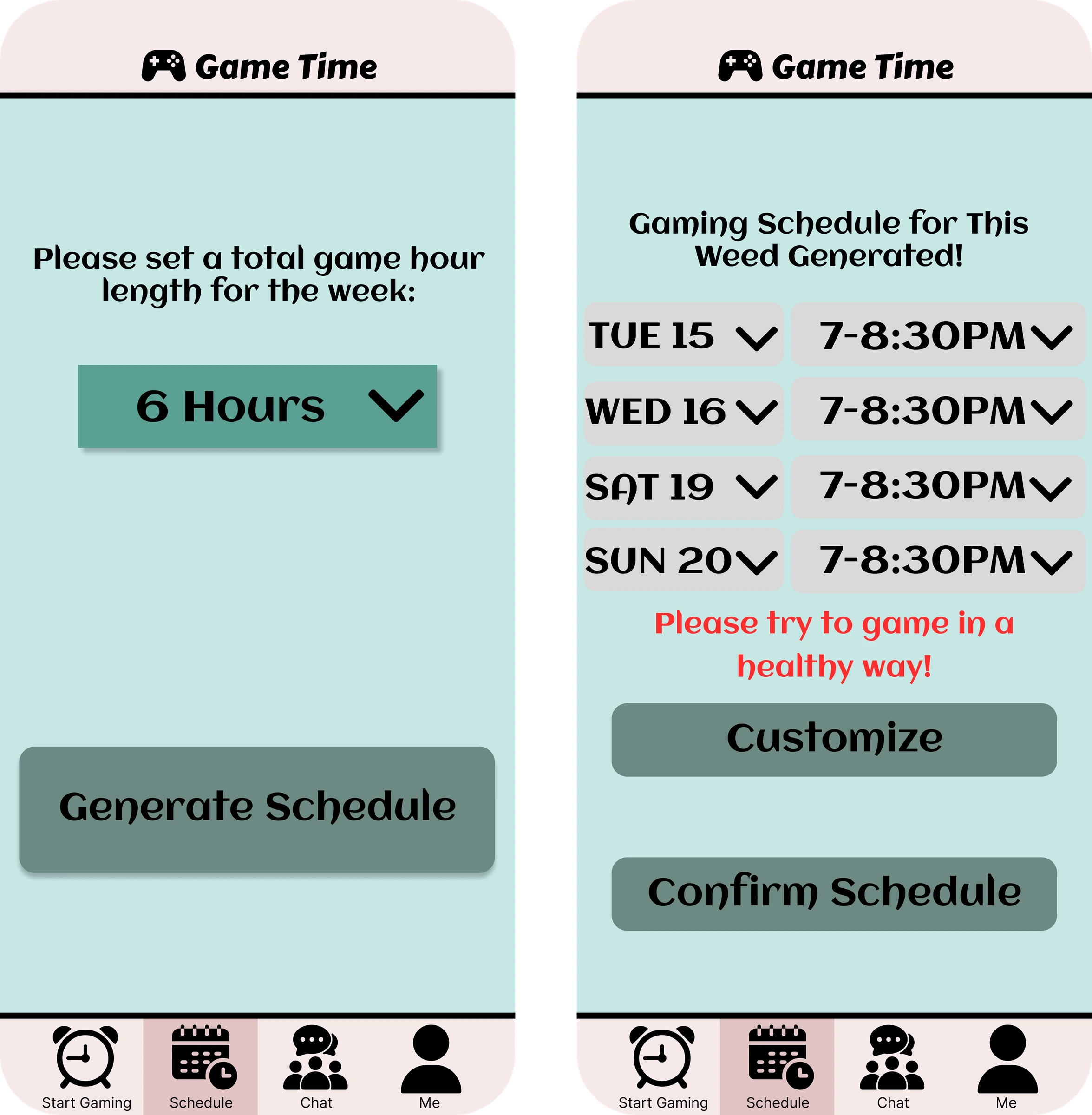
Another key feature of the app is to assist and encourage gamers in building and keeping their own gaming schedule. The schedule is fully customizable but contains a weekly gaming-time limit which restricts users from over-gaming. Gamers will not be able to start gaming without building a schedule. This should, in turn, promote gamers' discipline.
A gaming community hub feature is deployed in the app. Gamers should be able to support each other throughout the struggle with gaming addiction. This gaming hub will hopefully develop into a healthy-gaming promotion community where gamers call on each other to balance gaming and life.
The gaming-time data of each user is recorded and visualized so the user has a clear understanding of the amount of time spent on gaming. This feature provides quantitative data as a solid reference and reminder of the user's “game health” level. It is also the place for users to keep rewards and badges earned by gaming healthily.
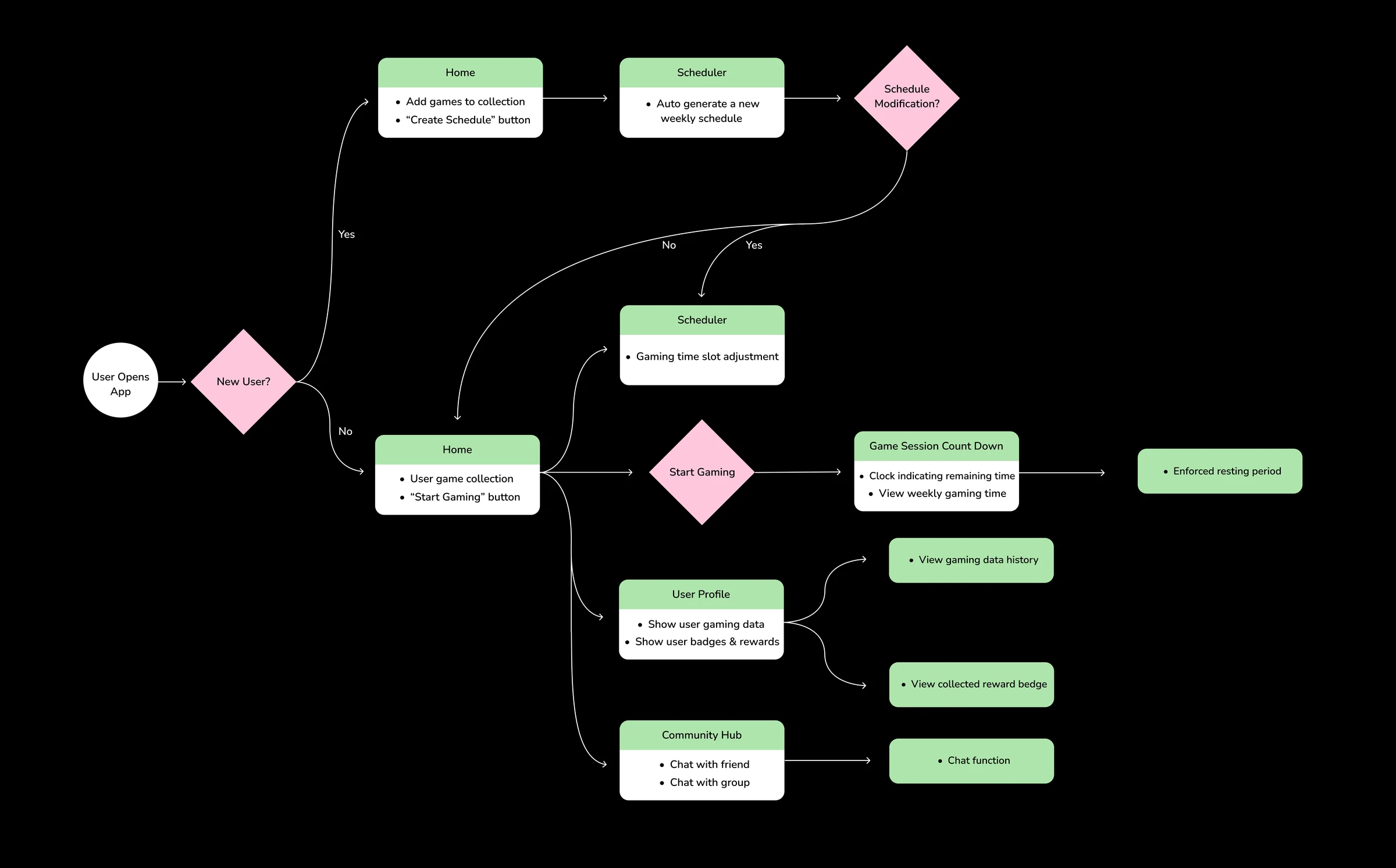
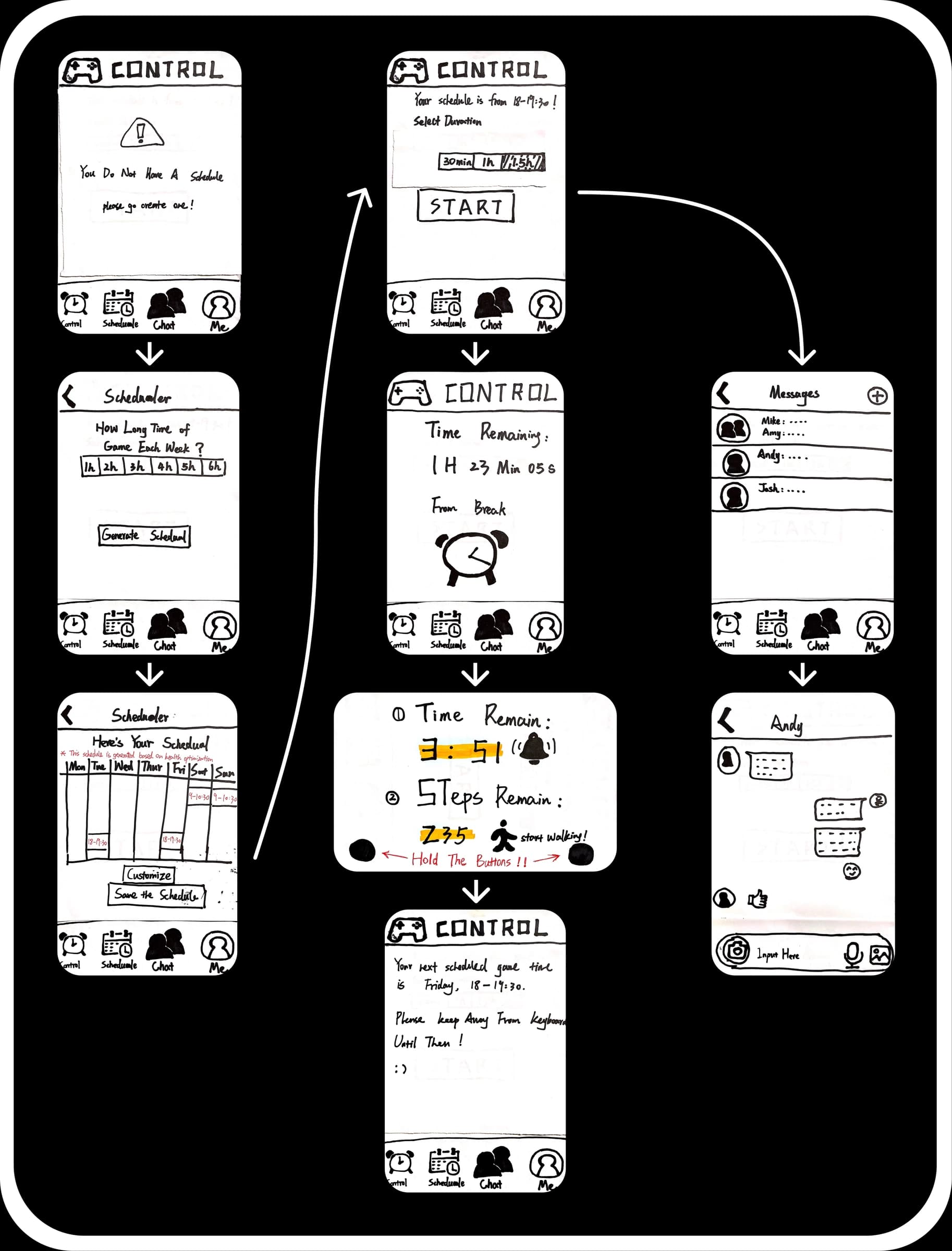
A major change in my design was the interconnection between the schedule builder and the time control. Originally, the two features of my app were not interrelated, which meant gamers could start a gaming session with or without a generated gaming schedule. However, users in my usability testing strongly suggested making the two features connected so that the features would not seem isolated and result in the app becoming fractured. Thus, I eventually made the two features related. A user can only start a gaming period after making a schedule and when the recorded gaming hour starts.
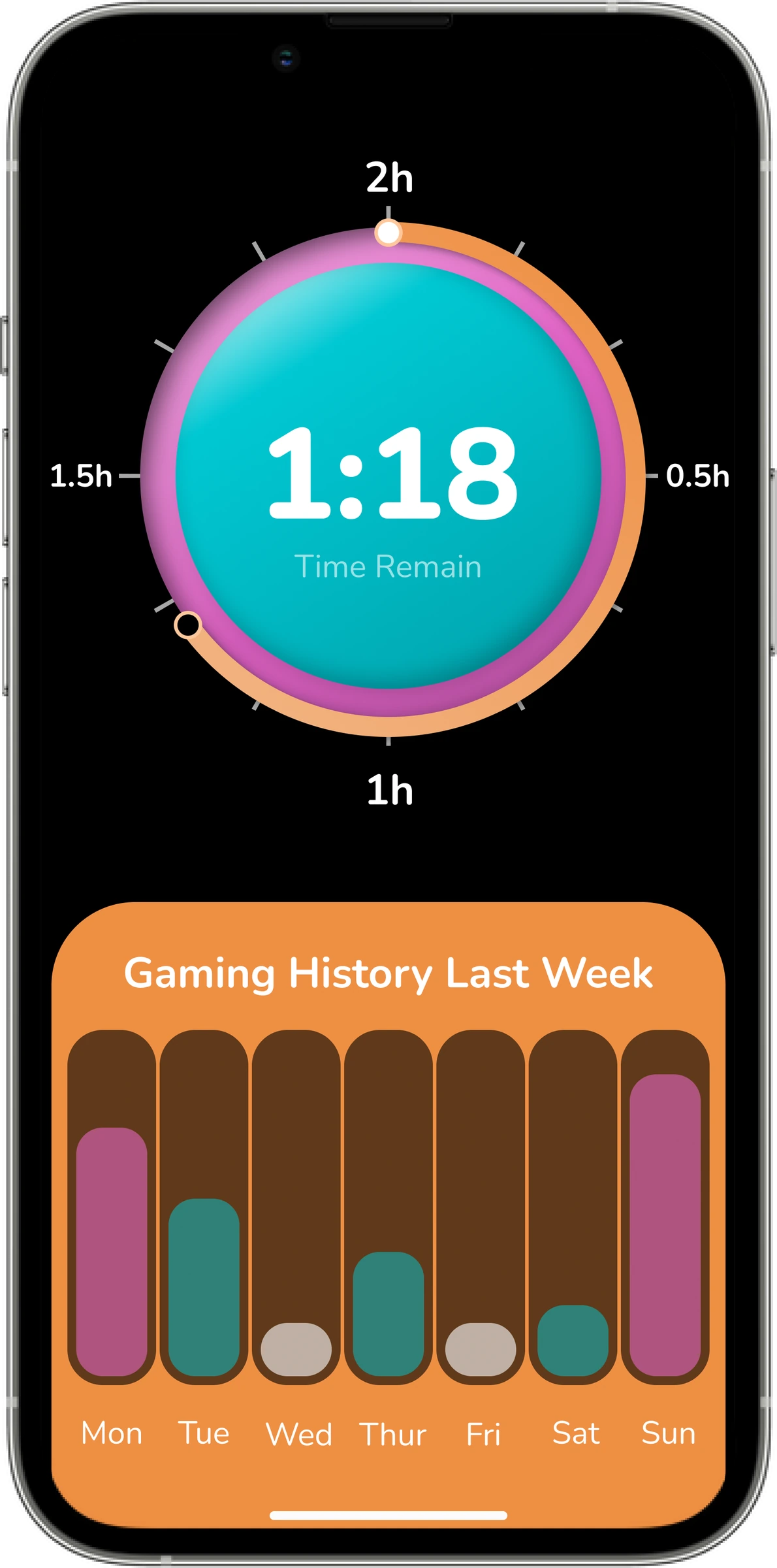
• Stop user from over-gaming
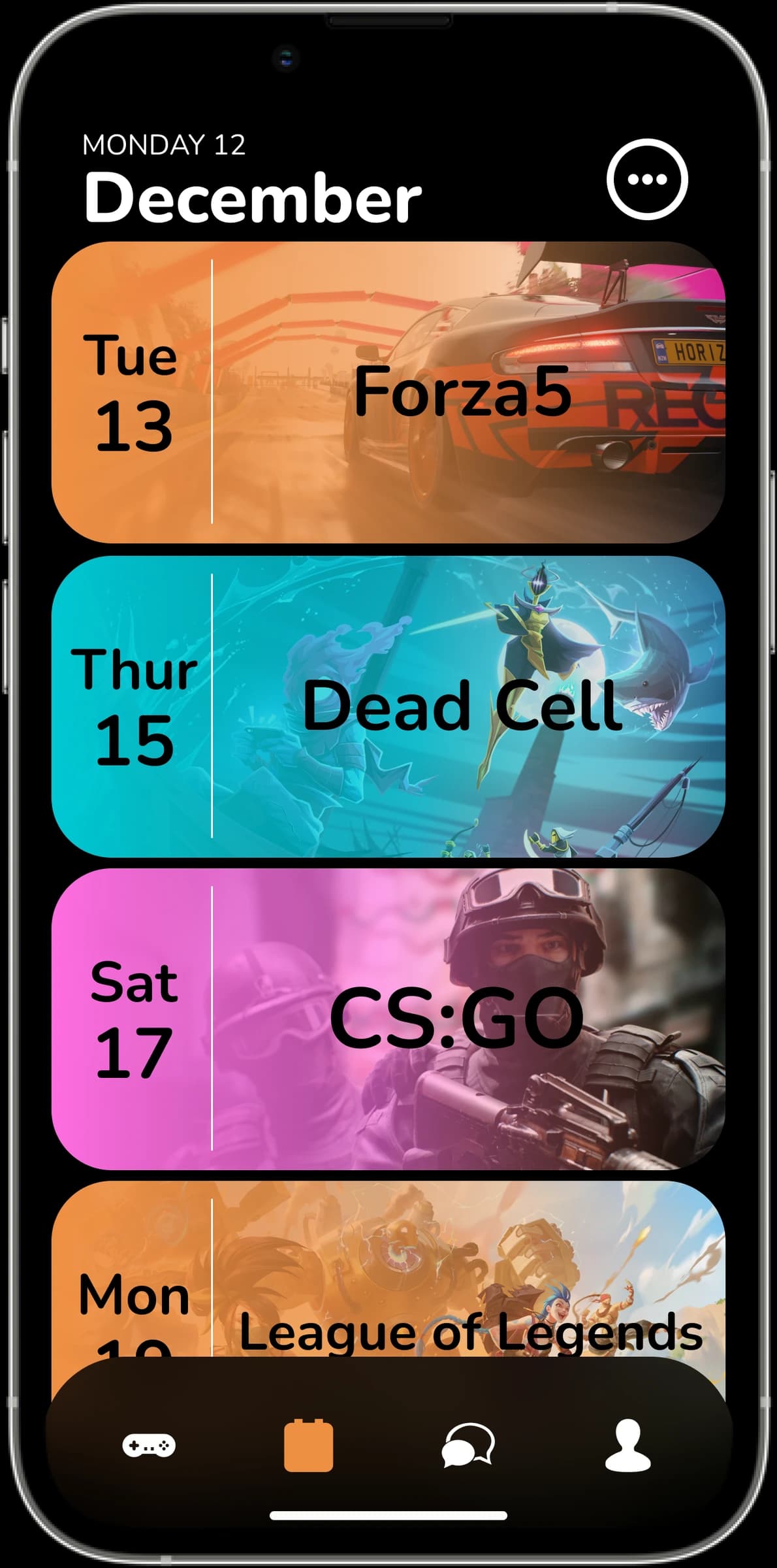
• Auto generate healthy schedule
• User customizable
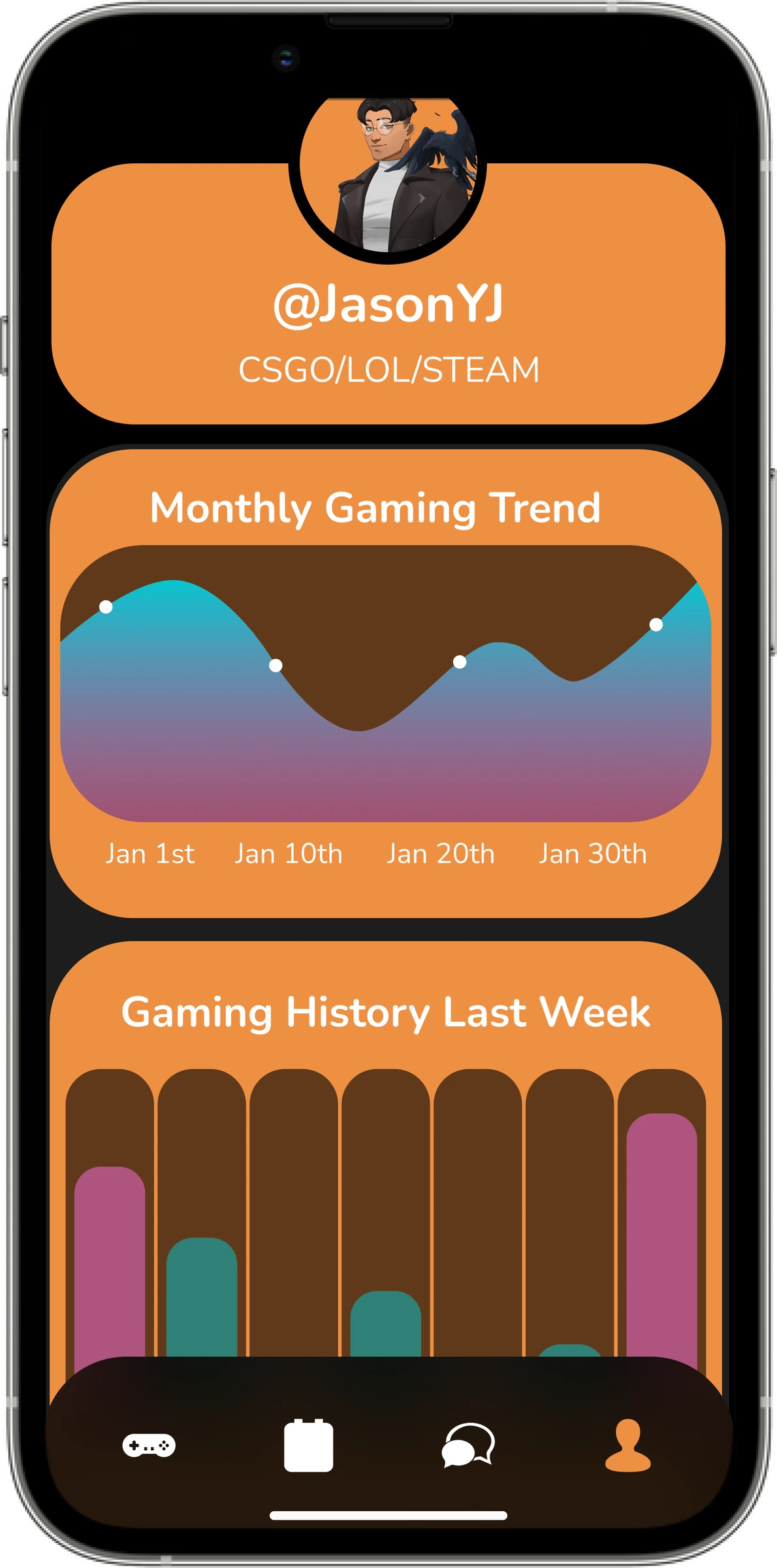
• Display user gaming data
• Exhibit user achievement badges
My design philosophy was to apply both restriction and support to users in order to help them gain a sufficient amount of self-discipline. The core belief of my design philosophy was that every individual had the sense and ability to control themselves, even when suffering from addiction problems. Thus, I did not want the app to become the user's walking stick for a lifetime. In contrast, I wanted the app to cultivate self-control deep down in the user's heart and bring their unbalanced life back on track.